
Shell Q3 2026 Earnings: What the $5 Billion Buyback Really Signals
Shell announced a new $5 billion share buyback after a strong third quarter in 2026. That signals financial strength, but it does not establish a permanent earnings run rate: exceptional refining margins and volatile energy markets make through-cycle profitability more important than extrapolating one quarter.
Shell Q3 2026 earnings: what actually improved?
On October 29, Shell reported adjusted earnings of $10.8 billion for the third quarter. Reported income attributable to shareholders was $12.1 billion. These are different measures, not competing versions of the same fact. Adjusting the presentation of profit does not, by itself, establish how repeatable it is.
Cash flow from operations reached $21.0 billion, alongside cash capital expenditure of $7.9 billion. Shell can fund substantial investment while still generating money for its balance sheet and shareholders.
The qualification is the operating backdrop. Shell described elevated and volatile commodity prices, with record refining margins. Management can capture that opportunity; it cannot sign a contract making the cycle disappear.
Why Shell is more than a bet on the oil price
Shell combines production, liquefied natural gas, refining, trading and the marketing of energy products. Higher energy prices do not affect all these businesses in the same way. Producers generally benefit from higher realized selling prices. For refiners, the relationship between product selling prices, crude input costs and other operating expenses matters more than the oil price alone.
Chemicals & Products delivered $3.9 billion of adjusted earnings in the quarter. Shell attributed approximately $3.8 billion to Products and only about $0.1 billion to Chemicals. Describing that result as a broad recovery in chemicals would therefore tell the wrong story.
Integration spreads exposure but does not eliminate it. Disruptions, maintenance, weak demand and unfavorable trading conditions can affect several activities together. A refinery is not an insurance policy that pays out reliably under every oil-price scenario.
What the $5 billion share buyback means—and what it does not
The newly announced $5 billion program covers the next three months. It is planned capital allocation, not a payment already completed, and not a promise to repeat the same amount every quarter.
Separate that announcement from actual third-quarter distributions. Shell repurchased approximately $3.2 billion of shares and paid about $2.2 billion in cash dividends to shareholders: $5.3 billion in total, using rounded figures. The dividend declared for the third quarter is $0.3906 per ordinary share. Investors using depositary receipts should not assume that an ordinary-share figure automatically represents the amount per receipt.
Repurchases can reduce the share count and increase remaining shareholders' proportional claim on future earnings. Whether they create value also depends on the price paid. An expensive repurchase remains expensive, even when its announcement sounds reassuringly shareholder-friendly.
The relevant question is therefore not simply how large a program looks. It is whether the business can sustain capital returns through weaker conditions without compromising necessary investment or balance-sheet resilience.
Why Shell's $16.3 billion free cash flow needs a definition
Shell reported quarterly free cash flow of $16.3 billion. Its definition adds operating cash flow to cash flow from investing activities. Investing cash flow includes more than capital spending: asset-sale proceeds and other investing payments also enter that calculation.
Simply subtracting cash capital expenditure from operating cash flow produces approximately $13.1 billion instead. That does not make Shell's measure incorrect. It shows why free-cash-flow figures from different companies need matching definitions before they can be compared.
There is an important countercheck. Shell also reported organic free cash flow of $17.0 billion, removing acquisition and divestment activities under its reconciliation. The claim that cash generation is strong only because Shell sold assets would therefore be too simplistic. Acquisitions, disposals and other flows all matter in this quarter.
Shell also identified a $3.4 billion cash inflow related to derivatives. This is real cash, but it is not sufficient evidence to assume the same contribution will recur. Understanding the components of cash generation is more useful than choosing whichever headline total looks most comforting.
LNG investment: a growth opportunity with a long payback horizon
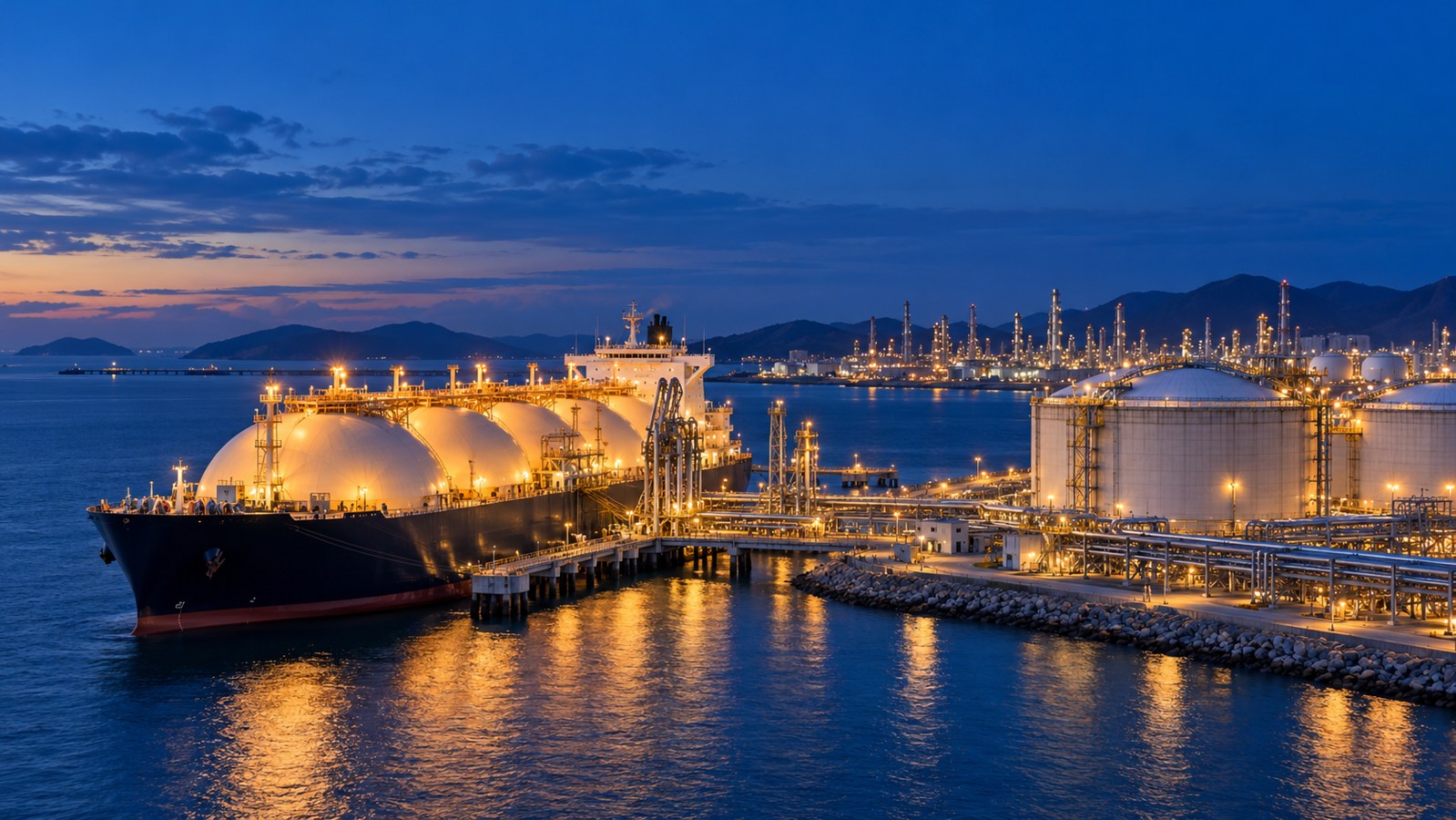
Shell completed the acquisition of ARC Resources and took the final investment decision on LNG Canada Phase 2. These steps reinforce its focus on liquefied natural gas and the upstream supply supporting it. A newly approved project, however, is not the same thing as a fully operating asset already producing its eventual earnings contribution.
The company expects 2026 cash capital expenditure of $23 billion to $25 billion, including ARC. Assessing the return on that spending requires attention to construction costs, schedules, utilization and margins after shipping and operating expenses.
The opportunity is an integrated supply chain serving longer-term energy demand. The risks include cost overruns, changes in gas supply, weaker demand and regulatory intervention. More capacity creates value only if the returns over its useful life justify the capital committed. High spot-market prices today do not automatically validate every long-duration project.
Net debt and leases: exclusions are not an economic escape hatch
Quarter-end net debt was $39.7 billion, with gearing of 16.6% under Shell's definition. Shell also presents substantially lower measures excluding leases. That offers another analytical perspective; it does not remove contractual obligations.
Long-term access to ships and other leased assets enables the business but also brings payment commitments. Balance-sheet analysis should recognize both perspectives rather than treating the lower debt figure as the whole answer.
The practical issue is how comfortably operating cash generation can meet investment needs, financial obligations and shareholder distributions under less favorable conditions. A strong cash balance or an attractive headline ratio cannot answer that question on its own.
A practical checklist for the next quarters
- Earnings durability: How does operating performance hold up if refining margins normalize?
- Investment discipline: Do spending and new LNG projects remain consistent with the stated plans?
- Capital returns: Can dividends and buybacks be funded without persistently weakening the balance sheet?
- Cash-flow quality: Are organic generation, portfolio transactions and derivative cash movements being assessed separately?
For valuation, normalized earnings across different energy-price environments are more useful than multiplying an exceptional quarter into a permanent annual forecast. Our guide to fair value using DCF and valuation multiples explains why a good business and an attractive purchase price are separate questions.
The SmartDeer view
Shell is demonstrating financial strength and directing it toward both growth and shareholder returns. The long-term investment question is not whether $5 billion of repurchases sounds impressive. It is how much earning power remains after normal refining margins, full investment requirements and all financial commitments are taken into account.
A strong quarter can improve the starting position. It cannot abolish the energy cycle.
This article is for information and general analysis only. It does not constitute investment advice.
Not investment advice. Independently verify information and assumptions.